
Most water damage in a house does not come from floods. It comes from plumbing that is already inside the walls and cabinets: a burst flex line under the bathroom vanity, a dishwasher drain that slipped off, a toilet tank bolt that corroded through, a tiny pinhole leak in aging copper overhead. Many Alhambra houses are several decades old; some sit on raised wood floors over a crawlspace, while others, and many later additions, sit on a concrete slab. Water behaves differently in each, and that changes what you should do first.
The goal of this guide is simple. Keep people safe, keep the damage from spreading, and avoid two common and costly mistakes: waiting to see if it dries by itself, and ripping out materials that could have been dried in place.
The first 72 hours, step by step
Stop the water and make the room safe
Close the nearest fixture valve if the leak is at a toilet, sink or appliance. If you cannot find one, or the leak is somewhere inside a wall or above a ceiling, shut the house main instead. Alhambra homes often have it on the front exterior wall where the supply pipe comes in, or out by the street-side water meter. Then think about electricity before you step into standing water. If water has reached outlets, a power strip or the ceiling light, switch that circuit off at the breaker panel while you are standing on a dry floor. If the panel itself is wet, stay out and call.
- Move rugs, electronics, paperwork and anything with a cardboard base onto a dry surface.
- Put foil or plastic under furniture legs so stain does not bleed into wet carpet.
- Push standing water toward a floor drain or out a door with a squeegee or towels.
Write down what happened before anything is moved again
Photographs taken now are the record you will lean on later, whether you are talking to a landlord, a property manager or an insurance adjuster. Take wide shots of each room, then close-ups of the waterline on baseboards, the failed part, and any ceiling stains. Keep the failed part itself, such as a split hose or a cracked fill valve, in a plastic bag. Note the time you found the water and the time you shut it off.
Get air moving and moisture out
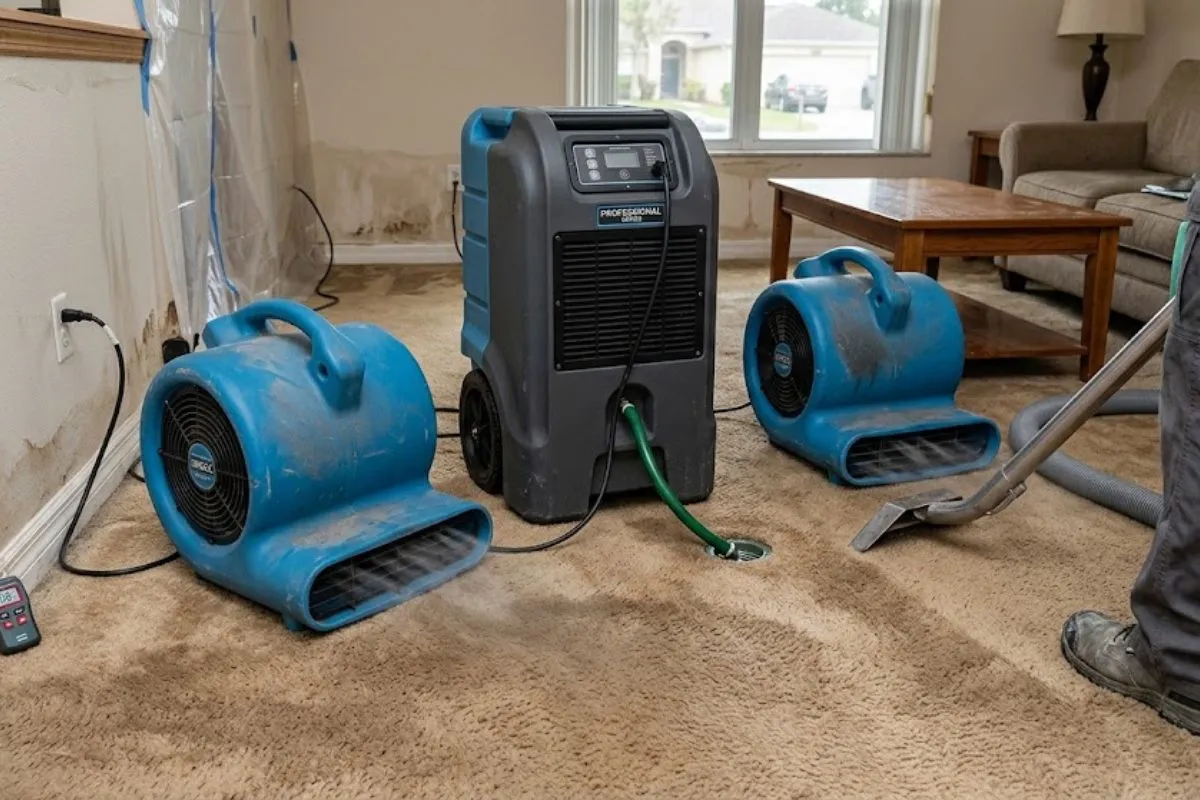
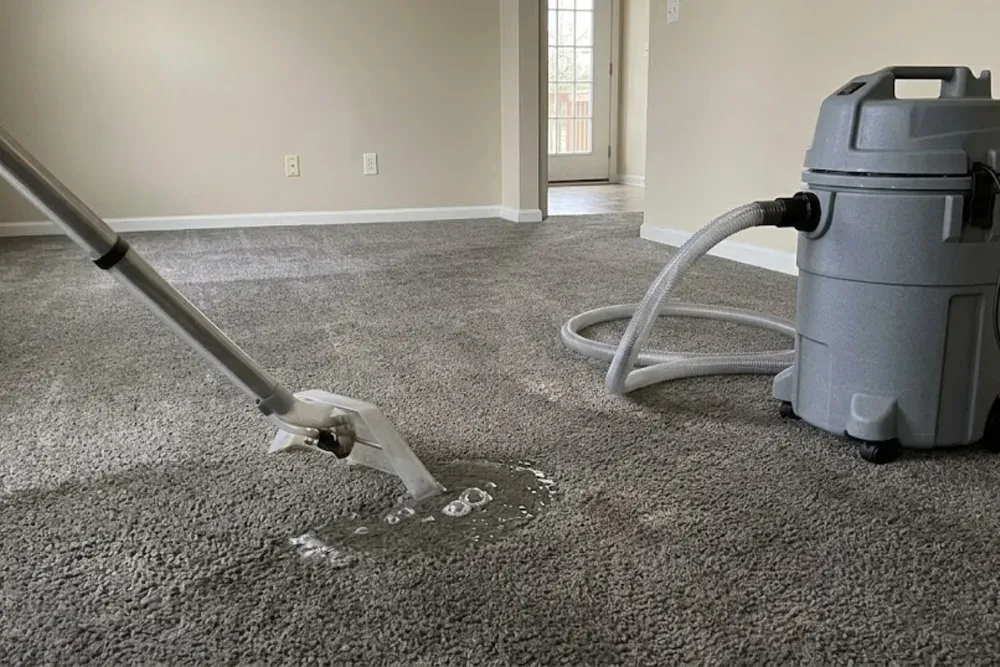
Open interior doors and closets so the wet area is not sealed in. On a dry Santa Ana day, opening windows helps; on a humid or rainy day, it can slow things down, so keep them closed and run the air conditioning instead. Pull the toe-kick panels off the bottom of kitchen or bathroom cabinets if water ran underneath. Wet carpet pad holds water like a sponge, and a household fan barely touches it, which is why this window is when a cleanup crew with extraction gear makes the biggest difference.
Measure, do not guess
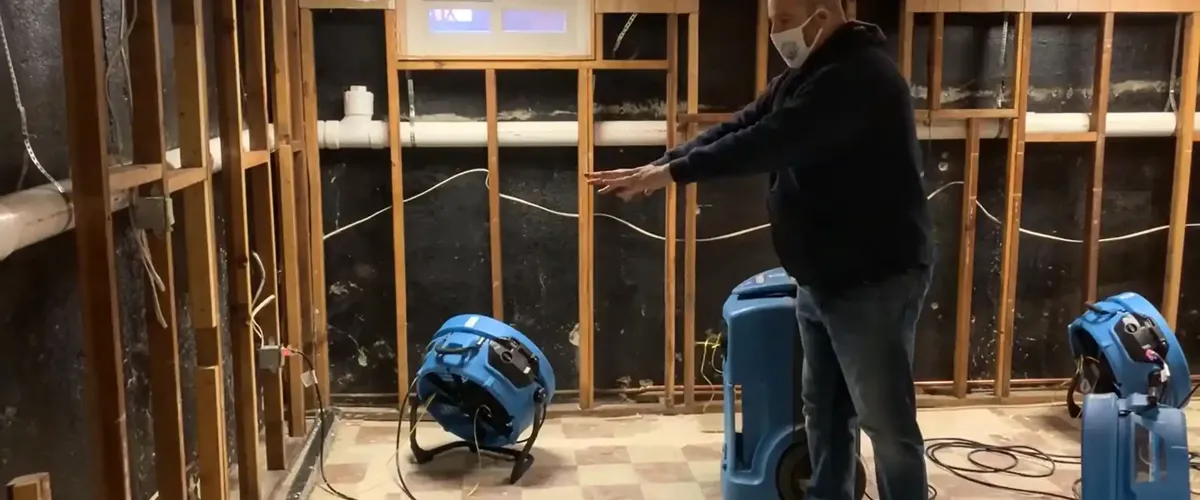
Drywall can feel dry to the hand while the bottom few inches are still soaked. Wood flooring can look flat on day one and start to cup on day three. Moisture readings at the base of walls and under the floor show whether the drying is working or whether a section has to be opened. A musty smell that keeps getting stronger, paint that bubbles, or baseboards that pull away from the wall are signs that water is trapped somewhere you cannot see.
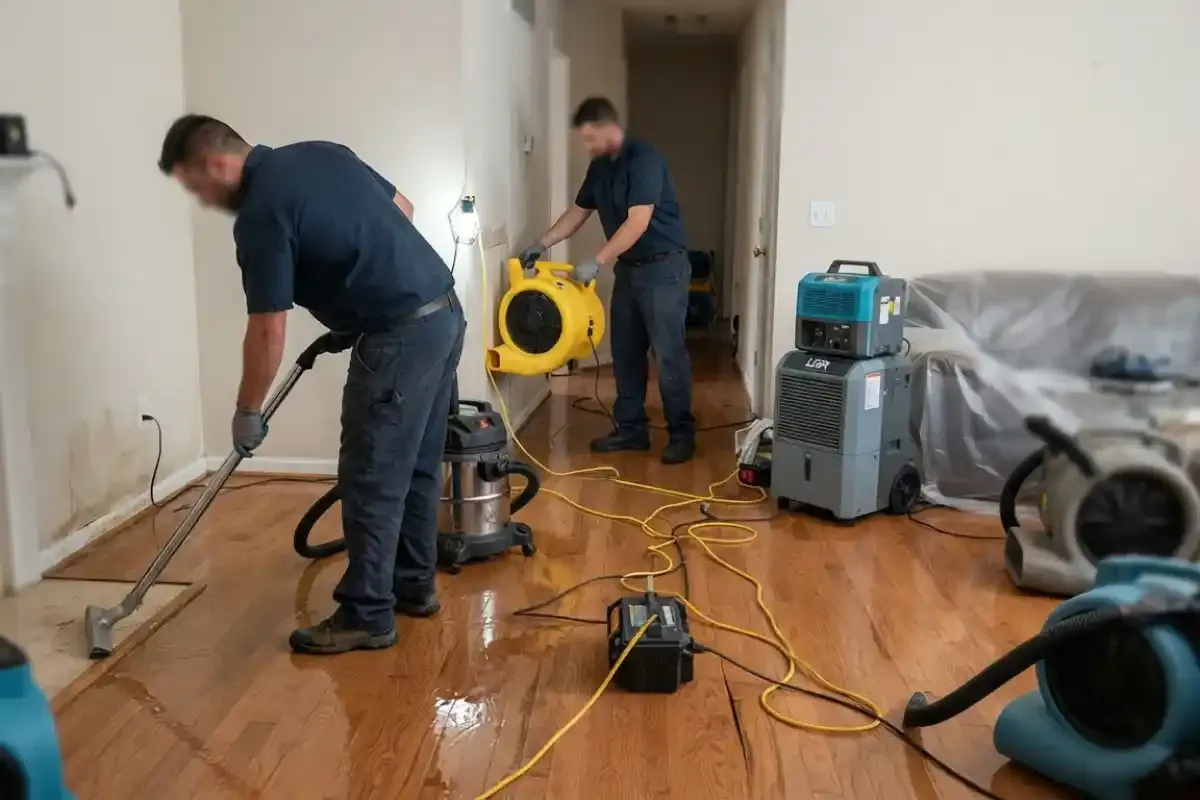
Clean, gray or dirty water: why the source matters
Cleanup advice depends on what kind of water you are dealing with. Restoration work commonly sorts it into three groups, and it is worth knowing which one you have before you start mopping with bare hands.
| Source | Typical examples | What it usually means for cleanup |
|---|---|---|
| Clean supply water | Burst supply line, faucet hose, water heater tank, ice maker line | Often dryable in place if caught within a day or two |
| Gray water | Washing machine discharge, dishwasher drain, sink overflow | Needs cleaning as well as drying; soft materials may be discarded |
| Sewage or toilet backup | Toilet overflow with waste, main line backing up through a tub or laundry drain | Keep children and pets out; porous items that touched it are usually replaced |
Clean water does not stay clean forever. After a couple of warm days sitting in carpet and drywall, even a supply-line leak starts to smell and needs more than fans. That is one more reason not to wait.
Room by room: where water hides in an Alhambra home
Kitchen
Water runs under the cabinet boxes and sits on the subfloor behind the toe kick. Laminate and vinyl plank can trap it underneath for days.
Bathroom
Vanity flex lines and toilet supply lines fail without warning. Check the wall cavity behind the toilet and the floor under the tub apron.
Laundry closet
Rubber washer hoses are a classic source. Water often travels into the hallway or the next bedroom along the bottom plate of the wall.
Garage water heater
A tank that leaks slowly can soak drywall and stored boxes before anyone notices. Look for rust tracks on the floor around the base.
Ceilings below a second floor
A sagging or bulging spot in the ceiling can be holding water. Keep people out from under it and put a bucket in place.
Raised floors over a crawlspace
Water that drips through the floor can pool on the soil below and keep the joists damp long after the room above looks fine.
What can usually be dried and what usually cannot
Every room is different, so treat this as a starting point for the conversation with whoever comes out, not a final verdict.
- Solid wood framing and subfloor usually dry well once air and dehumidification reach them.
- Drywall that got wet from clean water and was dried quickly can often stay; drywall that wicked dirty water usually gets cut out above the waterline.
- Carpet pad soaked for more than a day is often replaced even when the carpet itself is saved.
- Particleboard cabinet bases that swelled rarely go back to their shape.
- Insulation inside an exterior wall holds moisture and is usually pulled out if it got wet.
- Hardwood that cups slightly may flatten as it dries; boards that crown or split are another story.
When to call instead of handling it yourself
A wet towel under a sink is a weekend chore. These situations are not:
- The water came through a ceiling, from inside a wall, or from under the floor, and you cannot see the source.
- More than one room is wet, or water has run under cabinets or flooring.
- The water was from a toilet, a floor drain or a sewer backup.
- Outlets, the breaker panel or a gas water heater got wet.
- The room still smells damp or the walls read wet after two days of fans.
- You rent, and the landlord or manager needs a written account of the cause.
If any of those fit, you can read more about the plumbing side of the business on the Alhambra CA Plumbing Experts leak cleanup and drying help pages, or phone (626) 719-0189 and explain which rooms are wet.
What the person on the phone will ask
Answers to these questions keep the conversation short and help match the visit to the job:
- Is the water still running, and have you closed a valve or the main?
- Where did it start, and which rooms or floors did it reach?
- Roughly when did it start, or when did you first notice it?
- Is the water clean, soapy, or from a toilet or drain?
- Is power off to the wet area?
- What is the street address and the best number to reach you?
Fixing the cause so it does not happen twice
Drying the room is only half the job. The part that failed still has to be repaired or replaced, and it is worth asking whether its neighbors are the same age. If one braided hose under a sink burst, the others in the house were probably installed at the same time. If aging copper sprang a pinhole, a pressure check and a look at the rest of the run make sense. Small upgrades help too: a pan under the water heater or washer, a leak sensor on the floor, and knowing exactly where your main shutoff is before the next time.